[12th June 2024] The Communications Regulators’ Association of Southern Africa (CRASA) with sponsorship from Huawei convened a workshop on Emerging Issues in Spectrum Management from 12th and13th June 2024, at the Botswana Communications Regulatory Authority (BOCRA)Spectrum House, Gaborone, Botswana. The Workshop was attended by 78 participants from the 13 CRASA Member Organisations.
The Workshop was officially opened by the representative of the BOCRA Chief Executive Officer, Mrs. Evah Kentshitswe. She informed the workshop that BOCRA had recently launched its 2024-2029 StrategicPlan, emphasizing the importance of spectrum and prioritizing its management. “BOCRA's Strategic plan on Spectrum Management aligns seamlessly with the ongoing efforts of CRASA’ she said ‘By ensuring that spectrum is allocated and managed efficiently, we as regulators can facilitate the deployment of new technologies and services that stimulate economic development’.
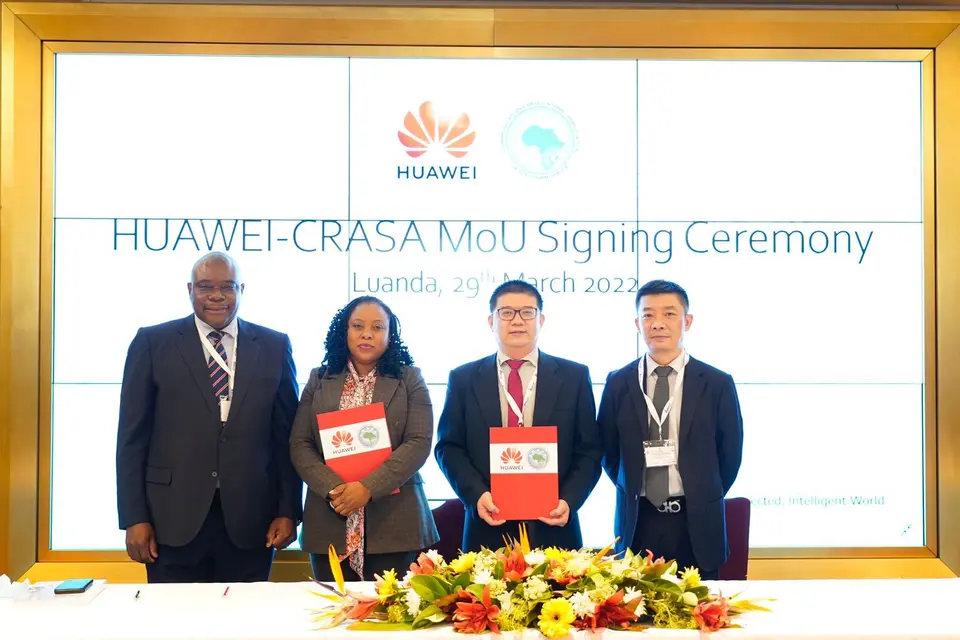
The Executive Secretary of CRASA, Ms. Bridget Mphatso Linzie, in her remarks, expressed gratitude to the Huawei for honoring their Memorandum of Understanding (MoU) and for the generous sponsorship that allowed for the convening of the workshop including the development of a White Paper on Policy and Regulatory Recommendations on Spectrum Strategy for Advanced Mobile Broadband in SADC. She said that the workshop was a continuation of the discourse regarding the achievement of the CRASA Strategic focus on Effective Regulation for Communications Sector in the Southern African Development. ‘It is well known that spectrum is a finite resource that is fundamental to a wide range of services such as mobile communication, broadcasting and emergency services”said Ms. Linzie, “It is prudent, therefore, that spectrum policies should align to the broader national goals of the communications sector”. She, therefore, observed that effective and efficient allocation and management of this critical resource was essential to fostering innovation, efficient use of the spectrum and achievement of universal access and service goals. In conclusion she said,‘aligning our spectrum policies with the broader national goals of the communications sector is not just a strategic necessity but a visionary obligation, supporting the national developmental agendas. Let us commit to more forward-looking and agile regulatory approaches and in harmony we ensure that our spectrum management practices support our broader national goals and pave the way for a more meaningful connected future’.
The CRASA Electronic Communications Committee (ECC) Chairperson, Dr. Imaja Itulelo noted that SADC was standing on the edge of a new era in technology and communication and that the decisions that regulators made today would shape the regional economic, social, and technological landscape for generations to come. “Our spectrum management approaches must drive economic growth and innovation” said Dr. Itulelo.
In his remarks, Mr. Mlungisi Nhlapo, Chief Wireless Technology Officer for Huawei Southern Africa, highlighted the pivotal role of Huawei in the development of wireless technology across the African continent over the past 28 years. “From the advent of 2G to the cutting-edge 5G, Huawei has been at the forefront, supporting Africa’s journey through each generation of wireless technology,”said Mr. Mlungisi. “The rapid growth of wireless development is inseparable from the availability of spectrum.” He also said that despite the global 4G user penetration standing at 60%, Africa trails with a 38% penetration rate.He, however, emphasized that the African wireless industry, currently in the 4G era and at the start of 5G development, showcases user behaviour comparable to the rest of the world. “Spectrum is the lifeblood of wireless communication and the current bottleneck hindering further development,” he stated. “In particular, the 2.3GHz and 2.6GHz spectrums in many African countries are fragmented and require unification to streamline services and enhance connectivity.” He further underscored the necessity of dedicated spectrum for Public Protection and Disaster Relief (PPDR) to ensure reliable communication during emergencies. He concluded by saying that Huawei’s commitment to theAfrican region was unwavering, and the company continued to work closely with governments and industry partners to address the challenges being met and support the next leap in wireless technology for Africa.
The Workshop focuses on: several strategies to maximise the socio-economic value of spectrum without compromising the financial health of the mobile communications sector; demand growth estimation and forward-looking spectrum planning; optimisation of frequency bands by defragmenting frequency assignments to mitigate or eliminate passive intermodulation interference and also to allow for wider band sizes to support advanced mobile technology; and developing practical regulatory solutions to support efficient spectrum use as well as promote competition.